

Summary
Dental implants are the product of advanced engineering, strict quality control, and continuous scientific innovation. From selecting high-grade titanium to precision machining and specialized surface treatments, every step in the manufacturing process is designed to create a safe, durable, and highly functional medical device.
How Are Dental Implants Manufactured? A Behind-the-Scenes Look at Modern Implant Technology
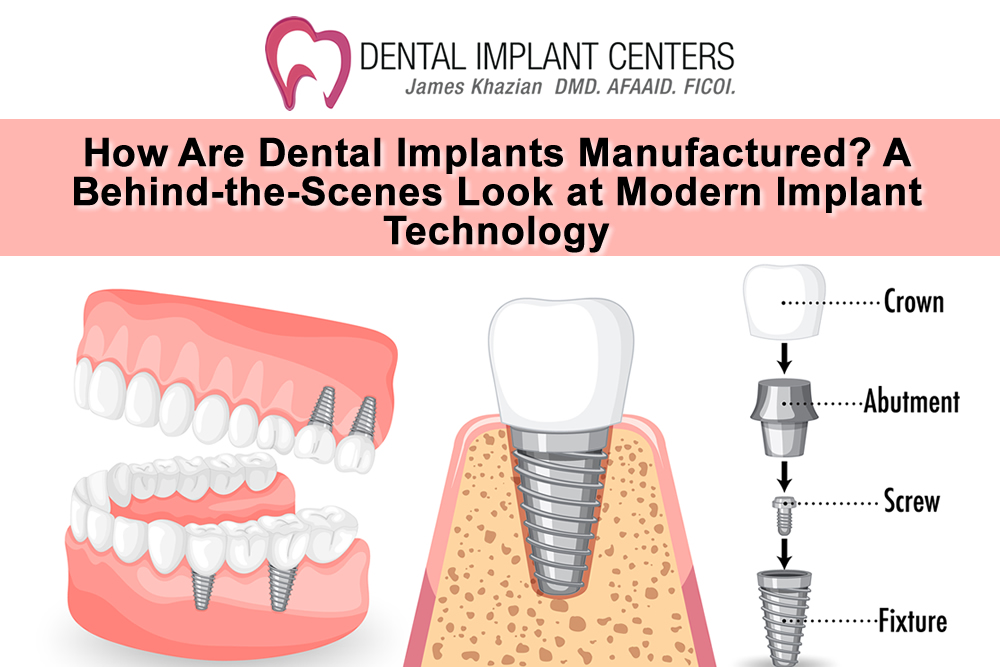
Dental implants may look like small titanium screws, but their creation is anything but simple. Each implant is the result of advanced engineering, precise machining, and rigorous medical testing. Designed to replace missing tooth roots and support crowns, bridges, or full-arch restorations, dental implants must be strong, biocompatible, and built to last for decades.
So how exactly are dental implants manufactured? Let’s take a closer look at the fascinating process that transforms raw materials into one of dentistry’s most successful restorative solutions.
Step 1: Choosing the Right Material
The majority of dental implants are made from medical-grade titanium or titanium alloys. Titanium is the material of choice because it offers several important benefits:
- Exceptional strength
- Lightweight structure
- Resistance to corrosion
- Biocompatibility (safe for use in the human body)
- Ability to fuse naturally with bone
This fusion process, known as osseointegration, allows the implant to become securely anchored in the jawbone. Some implants are also made from zirconia (a ceramic material), but titanium remains the most widely used and clinically proven option.
Step 2: Digital Design and Engineering
Before manufacturing begins, engineers design the implant using advanced computer-aided design (CAD) software. Dental implants are carefully engineered to include:
- Threaded designs for initial stability
- Tapered or cylindrical shapes
- Internal connection systems for attaching abutments
- Surface characteristics that promote bone growth
These digital designs are incredibly precise, often measured in microns. Even minor variations can impact how the implant performs once placed in the jaw.
Step 3: Precision CNC Machining
After the design phase, manufacturing begins using Computer Numerical Control (CNC) machining.
CNC machines carve implants from solid titanium rods with extreme accuracy. These automated machines follow digital programming instructions to shape:
- The implant body
- Thread patterns
- The internal connection where the abutment attaches
Because dental implants must fit precisely with restorative components, this step demands meticulous precision. Each implant is manufactured to exact specifications to ensure consistency and reliability.
Step 4: Surface Treatment for Osseointegration
One of the most important advancements in implant manufacturing involves surface modification.
Early implants had smooth surfaces. Today, most implants feature micro-textured or roughened surfaces. Why? Because rough surfaces increase the surface area available for bone cells to attach, improving stability and accelerating healing.
Manufacturers use specialized techniques such as:
- Sandblasting
- Acid etching
- Laser micro-texturing
- Plasma spraying
These processes create microscopic irregularities that encourage bone cells to grow and integrate with the implant more effectively.
This surface engineering plays a critical role in long-term success.
Step 5: Cleaning and Decontamination
Once machining and surface treatment are complete, implants undergo thorough cleaning.
During manufacturing, microscopic debris or residues can remain on the surface. To remove these particles, implants are cleaned using:
- Ultrasonic baths
- Chemical cleaning solutions
- High-pressure rinsing systems
This step ensures the implant surface is pure and ready for safe placement inside the body.
Step 6: Sterilization
After cleaning, implants are sterilized under strict medical standards.
Sterilization eliminates bacteria, viruses, and other microorganisms that could cause infection. Common sterilization methods include:
- Gamma radiation
- Autoclave sterilization
- Ethylene oxide gas
Because implants are surgically inserted into bone, sterility is absolutely essential for patient safety.
Step 7: Quality Control and Testing
Before reaching dental professionals, implants must pass rigorous quality control checks.
Testing often includes:
- Dimensional verification to ensure precise measurements
- Surface inspection under magnification
- Mechanical stress testing to simulate chewing forces
- Fatigue testing to evaluate long-term durability
Dental implants must withstand significant pressure daily—often hundreds of pounds of biting force over time. Only implants that meet strict international standards are approved for clinical use.
Step 8: Sterile Packaging and Traceability
After passing inspection, implants are sealed in sterile packaging within clean-room environments.
Each implant is labeled with:
- Batch numbers
- Manufacturing details
- Expiration dates
This traceability allows manufacturers to maintain safety records and quality assurance standards.
The sterile packaging keeps the implant protected until the moment it is opened during surgery.
Continuous Innovation in Implant Manufacturing
The manufacturing of dental implants continues to evolve with advancements in materials science and digital technology.
Modern innovations include:
- Nano-textured surfaces to speed healing
- Improved implant-abutment connections to reduce bacterial leakage
- 3D printing for customized components
- Digital integration with guided surgery systems
These advancements improve predictability, reduce healing time, and enhance long-term outcomes for patients.
Why Manufacturing Precision Matters
The success of a dental implant doesn’t begin in the dental chair—it begins in the manufacturing facility.
Precision manufacturing ensures:
- Proper bone integration
- Structural strength
- Accurate restorative fit
- Reduced risk of complications
Because implants function as artificial tooth roots, they must perform reliably for years under constant use.
Final Thoughts
Dental implants are the product of advanced engineering, strict quality control, and continuous scientific innovation. From selecting high-grade titanium to precision machining and specialized surface treatments, every step in the manufacturing process is designed to create a safe, durable, and highly functional medical device.
While patients may only see the final result—a natural-looking replacement tooth—the science and craftsmanship behind each implant are what make long-term success possible.
If you are considering dental implants, understanding how they are manufactured can provide added confidence in the reliability and strength of this modern tooth replacement solution.
For more information about dental implants, all-on-4, all-on-6, bone grafts, sinus graft, full mouth reconstruction, snap on dentures, and cosmetic dentistry, you may request a free consultation with Dr. James Khazian by clicking here or call 866-4my-smile (866-469-7645).