

Summary
Dental implant surgery is a precise and highly predictable procedure designed to replace missing teeth at the root level. While the word “surgery” may sound intimidating, the process is structured, carefully planned, and typically very manageable for patients.
What Is Dental Implant Surgery? A Clear Guide for Patients
When people hear the term “dental implant surgery, they often imagine something complicated or intimidating. Dental implant surgery is a carefully planned procedure designed to permanently replace missing teeth in a way that looks natural and functions just like the real thing.
If you are considering implants, understanding what the surgery involves can make the process feel far less overwhelming.
Understanding the Purpose of Dental Implant Surgery
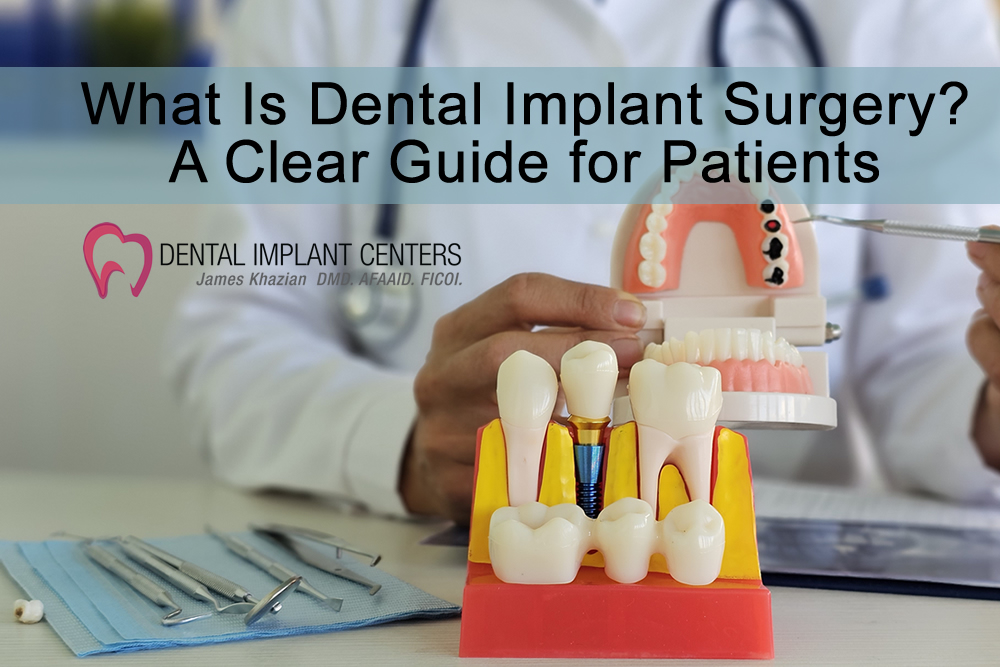
Dental implant surgery is a procedure that replaces the root of a missing tooth with a small titanium post. This post is placed into the jawbone and serves as a stable foundation for a crown, bridge, or even a full arch of teeth.
Unlike dentures that rest on top of the gums, implants are secured inside the bone. This is what gives them their strength, stability, and long-term success.
The goal of dental implant surgery is not just cosmetic. It restores chewing ability, protects the jawbone from deterioration, and helps maintain facial structure over time.
Why Surgery Is Necessary
Natural teeth are anchored into the jawbone by roots. When a tooth is lost, the root is lost as well. Without stimulation from a tooth root, the jawbone in that area can begin to shrink.
Dental implant surgery places an artificial root into the bone. Over time, the bone fuses to the implant in a natural healing process. This connection creates a solid base for replacement teeth and helps preserve bone health.
Because the implant must integrate with the jawbone, surgery is required to properly position it.
What Happens Before the Procedure
Before dental implant surgery takes place, careful planning is essential. The dentist performs a detailed evaluation that may include digital X-rays or 3D imaging. These images allow the dentist to assess bone density, identify important structures such as nerves, and determine the best position for the implant.
Your medical history is also reviewed to ensure you are a good candidate for the procedure. Healthy gums and sufficient bone support are important for long-term success.
If additional preparation is needed — such as bone grafting — that will be discussed during the consultation.
The Surgical Procedure: Step by Step
On the day of surgery, the procedure is typically performed under local anesthesia. Many patients are surprised to learn that implant surgery is often less uncomfortable than a tooth extraction.
Here is what generally happens:
1. Preparing the Area
The dentist makes a small opening in the gum to access the jawbone.
2. Creating Space for the Implant
A precise opening is prepared in the bone to fit the implant. This step is done carefully to ensure accuracy and stability.
3. Placing the Implant
The titanium implant is inserted into the jawbone. Once positioned properly, the gum tissue is placed back over or around it.
At this stage, the implant is left to heal and integrate with the bone. This healing process is essential for long-term strength.
The Healing Phase
Healing after dental implant surgery is a gradual process. Over the next few months, the bone bonds with the implant in a process known as osseointegration. This biological fusion is what makes implants so secure.
During healing, most patients return to normal daily activities within a day or two. Mild swelling or tenderness is common but manageable with recommended care.
The healing timeline can vary depending on the individual, the number of implants placed, and overall oral health.
Attaching the Replacement Tooth
Once the implant has fully integrated with the bone, the next phase begins. A small connector piece is attached to the implant, and a custom-made crown is secured on top.
The crown is designed to match your natural teeth in color, shape, and size. When complete, the implant looks and feels like a real tooth.
For patients missing multiple teeth, implants can also support bridges or full-arch restorations.
Is Dental Implant Surgery Painful?
One of the most common concerns is discomfort. Most patients report that implant surgery involves less pain than they expected. Because local anesthesia is used, you should not feel pain during the procedure itself.
Afterward, mild soreness or swelling may occur, but it typically subsides within a few days. Following post-operative instructions carefully helps ensure smooth healing.
Who Is a Candidate for Dental Implant Surgery?
Many adults with missing teeth are candidates for dental implants. Ideal candidates generally have:
- Healthy gums
- Adequate bone support
- Good overall health
- Commitment to oral hygiene
Teenagers and children are usually not candidates because their jawbones are still developing.
Even individuals who have experienced bone loss may qualify with additional preparatory procedures.
Benefits of Dental Implant Surgery
Dental implant surgery offers several long-term advantages:
- Restores full chewing ability
- Maintains jawbone strength
- Prevents shifting of nearby teeth
- Improves speech clarity
- Enhances facial appearance
- Provides a long-lasting solution
Unlike removable options, implants remain stable and do not require adhesives or special removal routines.
Long-Term Care After Surgery
Once healing is complete and the final restoration is placed, caring for a dental implant is similar to caring for natural teeth. Daily brushing, flossing, and regular dental checkups are essential.
With proper maintenance, dental implants can last decades and, in many cases, a lifetime.
Final Thoughts
Dental implant surgery is a precise and highly predictable procedure designed to replace missing teeth at the root level. While the word “surgery” may sound intimidating, the process is structured, carefully planned, and typically very manageable for patients.
By restoring both function and appearance, dental implant surgery offers more than just a new tooth — it provides stability, confidence, and long-term oral health.
If you are considering replacing a missing tooth, speaking with an experienced dental professional can help you determine whether dental implant surgery is the right solution for you.
For more information about dental implants, all-on-4, all-on-6, bone grafts, sinus graft, full mouth reconstruction, snap on dentures, and cosmetic dentistry, you may request a free consultation with Dr. James Khazian by clicking here or call 866-4my-smile (866-469-7645).